
 By
By 
Can you sleep anywhere in a campervan in Iceland? No. You cannot legally sleep anywhere when you rent a campervan in Iceland.
Overnighting outside registered campsites or authorized areas is illegal unless you have clear landowner permission. If you ignore that, you risk fines or being asked to move during the night.
Blogs and travel forums often oversimplify this rule or repeat outdated advice. That is where most confusion comes from.
Below, we break down exactly where you can sleep, where you can’t, the real grey areas people misunderstand, and what to do if wind, storms, or logistics disrupt your plan.
Iceland’s Camping Rules for a Campervan
Under Iceland’s Nature Conservation Act No. 60/2013, overnighting in motor vehicles is only permitted in organized campsites or with explicit landowner permission.
The Environment Agency of Iceland, Umhverfisstofnun, operates under this framework and supports enforcement across the country. Ferðamálastofa, the Icelandic Tourist Board, also reinforces these guidelines publicly for travelers, emphasizing campsite use and responsible overnighting.
That is the core of Iceland’s camping rules for a campervan.
Stricter enforcement did not happen randomly. Tourism numbers surged. Uncontrolled overnight parking followed. Moss was damaged. Waste was left behind. Farmers found vans on private access roads. The rules tightened because they had to.
Sleeping in a campervan in Iceland is legal. But only in the right places, meaning registered campsites or land where you have clear permission.
At Campervan Iceland, we advise planning campsites in advance for exactly this reason. It keeps you compliant, avoids unnecessary stress, and ensures your trip does not involve late-night surprises or uncomfortable conversations.

What Counts as ‘Sleeping’ or ‘Camping’?
Overnighting means a clear intention to spend the night in your vehicle. If it looks like you are setting up to sleep there until morning, authorities treat it as camping.
That includes:
- Curtains drawn
- Bed made up
- Chairs outside
- Cooking gear out
- Awning extended
At that point, you are not ‘just parked.’ You are camping. And wild camping in Iceland outside registered campsites or without landowner permission is not allowed.
This is where people start negotiating with themselves.
‘It’s only one night.’
‘No one’s here.’
‘We’ll leave early.’
Rangers and police do not debate philosophy. They assess intent on the spot. If you have turned a scenic parking area into a temporary backyard, expect a knock.

Now, the important distinction.
A short safety nap is different. Pulling over for 20 to 30 minutes because you are tired is sensible. Sleeping in a campervan during the day in Iceland for a brief rest is generally tolerated if it stays temporary and low-key.
Where You CAN Legally Sleep
Sleeping in a campervan in Iceland is legal, but only in clearly defined places. Campervans do not qualify for the limited tent ‘freedom to roam’ exception. If you are in a vehicle, overnighting requires a designated campsite or explicit landowner permission. There is no grey area there.
Organized Campsites
For overnight parking, campervan Iceland rules are simple: use registered campsites. There are more than 150 across the country. Most operate from May to September. Year-round campsites exist but are limited, so planning matters. Facilities usually include toilets and showers. Some offer electricity hookups.
Private Land with Permission
You must have clear landowner approval. Verbal permission is common, but written confirmation is safer. Empty fields and farm entrances do not mean access is allowed. Always ask.
Where You Cannot Sleep (Even If It Looks Empty)
Wild camping in a campervan in Iceland does not become acceptable just because a place looks quiet or convenient. Enforcement is based on location and intent, not how discreet you think you are.
Typical no-go areas include:
- Attraction parking lots near waterfalls, glaciers, and beaches
- Scenic viewpoints
- Road shoulders
- Rest areas
- National parks outside designated campsites
- Private farmland
- Closed campsite grounds
- Gas stations, unless explicitly allowed
- City supermarket parking lots

Grey-Area Scenarios People Actually Worry About
This is where people usually screw things up:
‘Other Vans Are Parked There. Can I Just Join Them?’
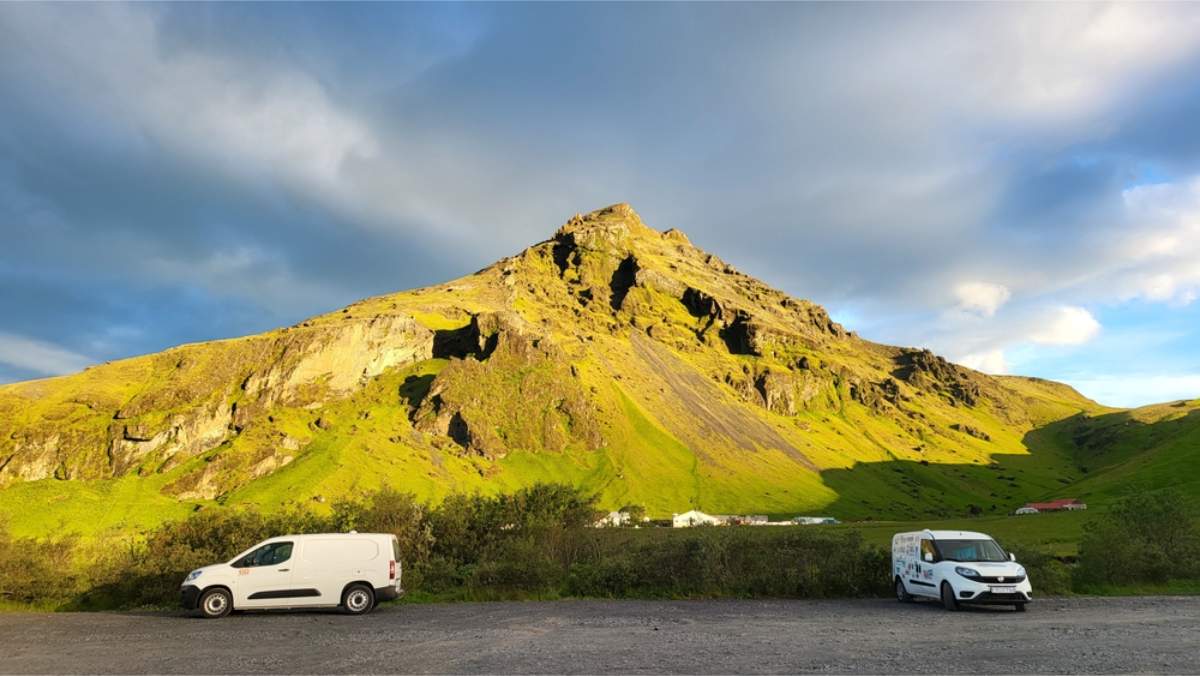
You will see this, especially in summer. Multiple vans parked overnight do not make it legal. It just means multiple people made the same decision. Enforcement does not operate on a majority vote. If a ranger decides to check, everyone gets the same conversation.
‘I Arrived Late. The Campsite Is Closed. Now What?’
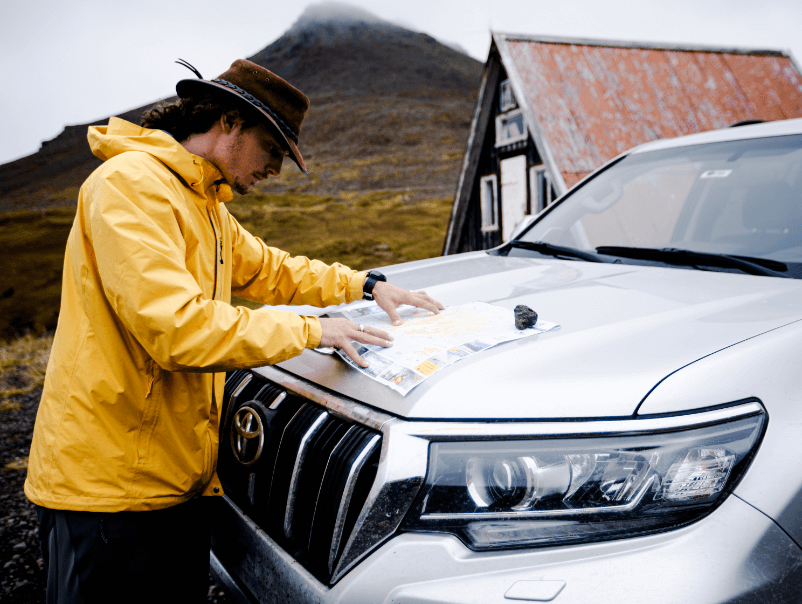
Some campsites allow late self-check-in. Others do not. Parking outside the gate and staying overnight is not a workaround. This is why we advise identifying at least one backup campsite within driving distance before sunset. Iceland distances are longer than they look on a map. After dark, options shrink fast.
‘The Weather Turned Bad. Can I Just Stay Where I Am?’
Safety comes first. If wind or visibility makes driving unsafe, stop temporarily. But once conditions stabilize, relocate to a legal campsite. Bad weather is not a blanket exemption from camping rules. It is a temporary safety pause.
‘I Only Meant to Nap. It Got Late.’
This is how accidental overnighting happens. A short rest is one thing. Curtains closed, stove on, and settling in for the night is another. Intent matters. If it looks like overnight camping, it will be treated that way.
‘Can I Just Sleep in a Regular Car?’
No. The law applies to motor vehicles in general. A rental car with the seats folded down does not change the legal status. Overnight stays are still restricted to campsites or landowner permission.

What About the ‘Urban Areas' Exception?
Remote does not mean permitted. It means you are assuming enforcement will not happen. Sometimes nothing happens. Sometimes it does.
You may see references to an ‘urban areas exception’ in Iceland’s camping discussions. This causes confusion.
Under national interpretation, overnighting inside developed town boundaries is not automatically classified the same as wilderness camping. However, that does not mean you can sleep on any street or in any parking lot.
Municipal bylaws apply.
In Reykjavík, for example, overnight parking in residential streets or supermarket lots is not freely permitted just because the area is urban. Local signage, parking restrictions, and specific municipal rules still control what is allowed.
If signage prohibits overnight parking, that rule stands.
Urban does not mean unrestricted. It means a different jurisdiction.
This is where travelers get it wrong. They hear ‘urban exception’ and assume city streets are fair game. They are not.
How to Plan So You Don’t Break the Rules (Checklist)
|
Stage |
What To Do |
Why It Matters |
|
Pre-Trip Prep |
Download Tjalda.is |
Access 150+ registered campsites and check opening periods |
|
Book ahead May-September |
Peak season fills fast, especially South Coast |
|
|
Check Umhverfisstofnun and Umferdin.is |
Laws stay the same, access and conditions change |
|
|
Daily Route Planning |
Plan campsites every 200-300 km (124-186 mi) |
4-6 hour driving days are realistic in Iceland |
|
Confirm winter openings |
Many sites close outside summer |
|
|
Identify one backup option |
Avoid improvising after dark |
|
|
Permission Protocol |
Ask landowners directly |
Permission must be explicit |
|
Avoid assumptions on farmland |
Empty does not mean available |
|
|
On-The-Road Habits |
Limit naps to short safety breaks |
Overnight setup changes intent |
|
Dispose of waste at campsites |
Enforcement increases where waste appears |
|
|
Monitor SafeTravel.is |
Weather shifts fast in Iceland |
FAQs About Camping in Iceland With a Camper
Can you sleep in your car in Iceland?
Nope. The same rules apply as to campervans. Overnight stays are only legal in registered campsites or with explicit landowner permission.
What happens if I get caught parking illegally?
You may be asked to move immediately and could receive a fine. Enforcement is common in tourist areas. It will disrupt your trip, especially if it happens at night.
How do I dispose of grey or black water properly?
Use designated dump stations at registered campsites only. Never empty wastewater in nature, rivers, or roadside drains. Plan your route around facilities.
Can families with kids ignore the rules?
No. The same rules apply to everyone. Campsites are safer and better equipped for families than improvised overnight spots.
Are there differences between winter and summer Parking?
Summer has more open campsites. Winter options are limited. Always confirm which sites are operating before driving.
Does parking illegally affect insurance?
Yes. Violating local laws or rental terms can affect coverage. Staying at registered campsites protects you legally and financially.

What about shoulder seasons?
Fewer crowds do not change the rules. Many campsites operate partially. Always confirm opening dates in advance.
What is the urban areas exception for camping in Iceland?
The urban areas exception for camping in Iceland allows limited overnighting in developed towns without it counting as formal camping. However, local bylaws and signage still apply.
Is it legal to sleep in a campervan in Reykjavik?
Only in designated campsites or where local bylaws explicitly allow overnight parking. Reykjavík does not function as a free overnight zone. Street parking rules and signage still apply.
Are rooftop tents treated the same as campervans?
Yes. If you are sleeping in or on a vehicle, it falls under the same overnight vehicle rules. Rooftop tents do not qualify for tent-based “freedom to roam” allowances.
Do you need landowner permission to sleep outside campsites?
Yes. Permission must be explicit. Assumptions do not count. If you cannot confirm approval, it is not legal.
So, Can You Sleep Anywhere in a Campervan in Iceland? Now You Know
Can you sleep anywhere in a campervan in Iceland? No. Freedom on wheels does not mean lawless parking. Campervan travel works exceptionally well here when you use registered campsites and plan ahead. Iceland enforces these rules because it has to. The landscape is fragile. Tourism is heavy. Structure keeps it sustainable.
If you want a smooth trip, map your campsites before sunset and avoid improvising after dark. Guesswork is what leads to knocks on the window. The goal is to experience Iceland properly, not test advice you half-read on Reddit at midnight.