

 By
By 
Iceland is famous for waterfalls, glaciers, and volcanic landscapes. It is also extremely windy. Many people discover this the moment they open the campervan door for the first time. Strong gusts are common across the island, especially along coastal roads and wide open plains.
For those of you planning to hire a van in Iceland, the wind is more than an inconvenience. Sudden gusts can pull doors open with surprising force, sometimes bending hinges or damaging panels. Over the years, this has been one of the most common incidents we have seen during rentals.
That is why understanding Iceland rental campervan wind damage insurance matters before starting a trip. Knowing the risks helps travelers avoid costly mistakes and handle windy conditions with confidence.
Campervan Insurance and Wind Damage Protection in Iceland
Many travelers search for Iceland rental campervan wind damage insurance, assuming there is a policy that protects against strong gusts. In reality, that type of coverage usually does not exist. Most campervan insurance packages in Iceland do not cover damage caused when wind catches a door, bends hinges, or damages mirrors.
What insurance does instead is reduce the financial risk for other types of vehicle damage during the rental period.
How Campervan Insurance Reduces Risk
Campervan insurance mainly limits how much a renter must pay if the vehicle is damaged in a covered accident. Basic coverage, such as Collision Damage Waiver (CDW) is included with most rentals, but a deductible still applies.
Additional protection options reduce that deductible. Super Collision Damage Waiver (SCDW) lowers the renter’s financial responsibility for covered incidents, while bundled packages such as Premium or Zero Risk reduce deductibles even further.
However, these protections apply to collision-related damage, not wind-blown door incidents.
Coverage Levels and Financial Responsibility
Insurance packages mainly change the financial outcome when damage is covered. Wind-blown door damage usually remains the renter’s responsibility.
|
Incident |
Standard Insurance |
With Additional Protection |
|
Door blown open by wind |
Not covered |
Not covered |
|
Bent door hinges from gusts |
Not covered |
Not covered |
|
Mirror damage caused by wind |
Not covered |
Not covered |
|
Wind-driven sand or ash damage |
Not covered |
Covered with SAAP |
Is Iceland Very Windy?
Yes. Iceland is windy year-round. Anyone driving around the island notices it quickly. Open plains, coastal roads, and mountain passes leave very little protection from moving air. According to climate research published on ResearchGate, average wind speeds across Iceland typically range between 5 and 10 m/s (18-36 km/h). During storms, gusts can exceed 20 m/s (72 km/h).
Why So Windy?
Iceland sits directly in the North Atlantic storm track, between Greenland and Northern Europe. Cold Arctic air regularly collides with warmer Atlantic air, creating persistent low-pressure systems that move across the island. According to atmospheric circulation research available on ResearchGate, these pressure differences generate the strong winds Iceland is known for.
The island’s landscape also contributes. Glaciers, mountains, and wide open plains accelerate moving air, which is why wind conditions can change quickly.
Typical Wind Data
Wind pattern studies published on ResearchGate show that average national wind speeds typically sit between 5 and 10 m/s. Gusts above 15 m/s (54 km/h) are common during windy conditions, while stronger storms can push speeds beyond 20 m/s.

Windiest Regions
Some parts of Iceland experience stronger wind exposure than others. The South Coast faces incoming Atlantic weather systems with little natural protection. The Snæfellsnes Peninsula and Eastfjords funnel wind through mountains and valleys. Inland, the Highlands and open lava plains along the Ring Road offer almost no wind barriers.
How Wind Affects Driving a Campervan in Iceland
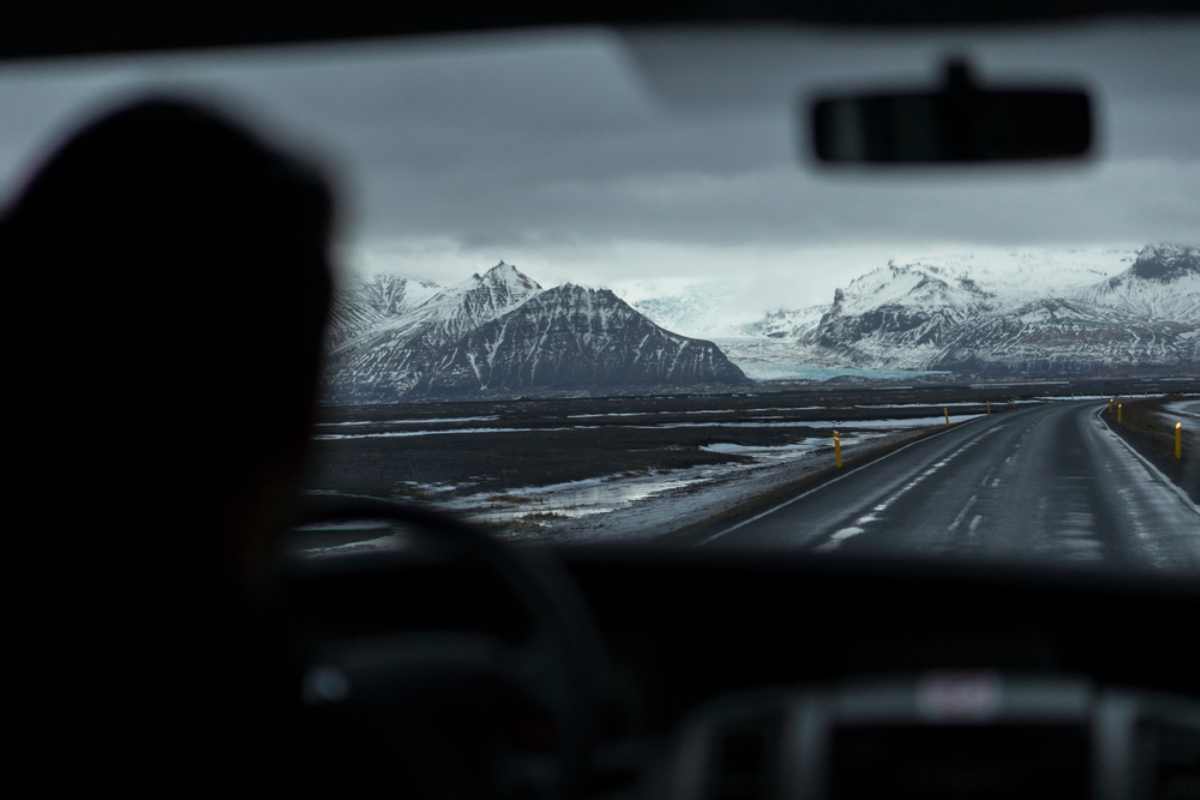
Driving a campervan in Iceland is not difficult, but the wind changes the experience. Larger vehicles react to gusts more than small cars. On open roads, strong crosswinds can push the vehicle sideways and force drivers to adjust steering and speed. Most people notice this quickly, especially when leaving towns and entering wide coastal areas or open plains.
Crosswinds and Vehicle Stability
Crosswinds are the main challenge. A campervan has a larger side profile than a normal car, which means wind pushes against it more easily. When gusts hit from the side, the vehicle may drift slightly across the lane, requiring small steering corrections.
Gusts around 20 m/s can appear suddenly on exposed roads. When that happens, most drivers instinctively slow down to regain control. Reducing speed helps stabilize the vehicle and gives the driver more time to react.
Heavier loads, roof boxes, or tall camper models can also make the vehicle feel less stable in strong winds.
Where Wind Is Strongest on the Road
Some locations make wind effects more noticeable. Bridges along the Ring Road often sit higher above the surrounding landscape, leaving vehicles exposed to gusts. Coastal roads along the South Coast and routes near Keflavík Airport can also experience strong Atlantic winds.

Mountain passes and valleys sometimes funnel air through narrow terrain, increasing wind speeds. Open plains in areas such as North Iceland or around Skaftafell offer very little natural shelter.
What Drivers Usually Do
Most travelers adjust quickly. When the wind increases, they simply slow down. Many drivers reduce speeds to around 40-50 km/h in strong gusts until conditions improve.
Steady steering and smooth inputs usually keep the campervan stable. The key is not to fight the wind aggressively. Slowing down and staying relaxed behind the wheel is usually enough to keep the drive comfortable.
The Most Common Wind Damage to Rental Campervans
Wind rarely damages a campervan while it is moving. Most problems happen when the vehicle is parked, and someone opens a door during a sudden gust. Over the years, this has been one of the most common incidents we have seen during rentals.
Doors Blown Open by Sudden Gusts
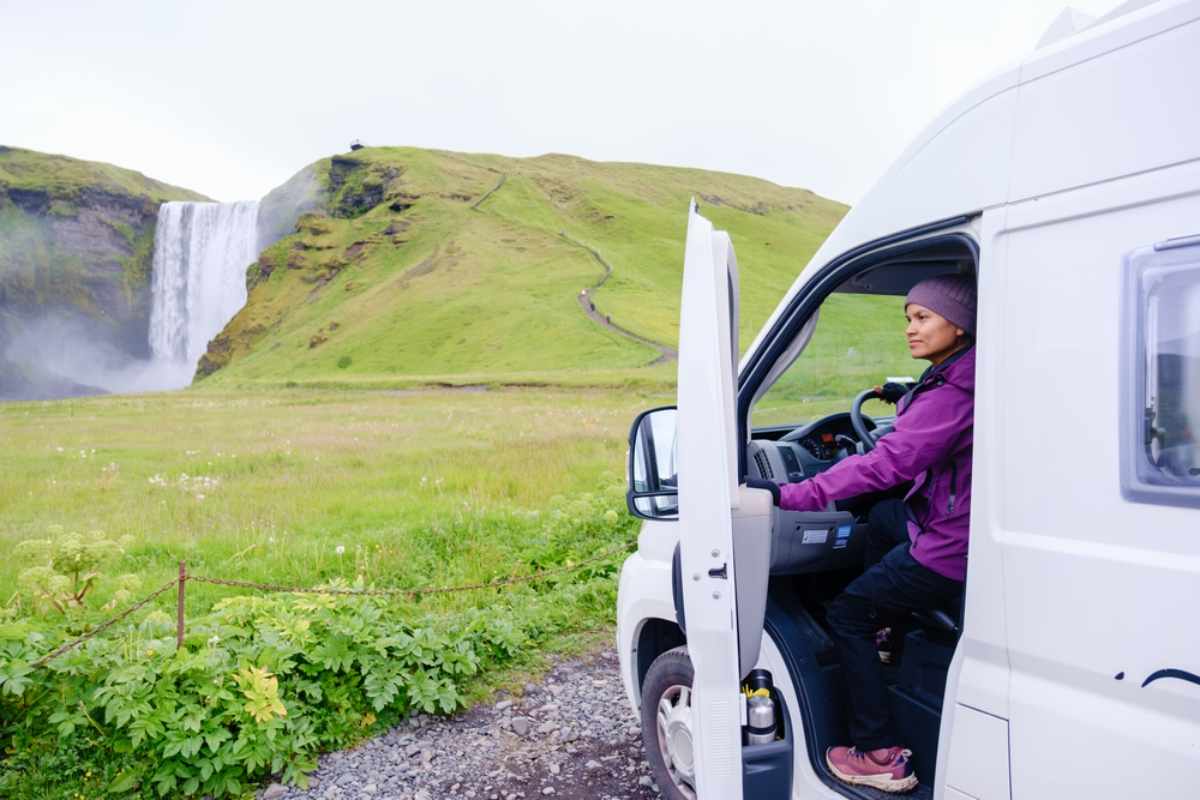
The most frequent issue involves campervan doors being pulled open by strong wind. When a gust catches the door at the wrong angle, it can force it open far beyond its normal stopping point. This often leads to bent door hinges, damaged panels, or broken handles.
Because campervan doors are larger than standard car doors, they catch more wind. Even a short gust can generate enough force to cause damage if the door is not held firmly.
Hinges, Panels, and Mirrors
When a door is forced open by wind, the hinges usually take the first impact. Hinges can bend, which prevents the door from closing properly. In stronger incidents, the door may hit the side of the vehicle, damaging the body panel. Side mirrors can also be affected if a gust pushes the door or if wind hits the mirror while the vehicle is parked.
How Expensive Wind Damage Can Be
Wind damage in Iceland is not cheap. A single strong gust can turn a simple mistake into a serious repair bill. For rental campervans, the cost often depends on what part of the vehicle was damaged and how extensive the repair is. Even relatively small incidents can quickly reach four-figure costs.
The Icelandic Method for Opening Campervan Doors in Strong Wind
Experienced campervan drivers in Iceland develop simple habits when exiting the vehicle. These small precautions help prevent many wind-related door incidents.
Step-by-Step Door Opening Method
- Check the wind direction first - Look at nearby grass, flags, or blowing dust to see where the wind is coming from before opening the door.
- Keep a firm grip on the handle - Always hold the door securely while opening it. Maintain control of the door at all times.
- Open the door slowly - Avoid pushing the door open quickly. Controlled movement gives you time to react if a gust hits.
- Use your body to shield the door - Position yourself between the wind and the door when stepping out of the campervan.
- Remind passengers to do the same - Passenger doors are often opened quickly without checking the wind direction first.
How Expensive Wind Damage Can Be
Wind damage to a campervan in Iceland can be expensive. Even a single incident can easily cost $1,000 to $4,000 USD, depending on what breaks and how severe the damage is. Repairs quickly add up because campervans use large body panels and specialized parts that are not always available locally.

Typical Repair Costs
The exact price depends on what the wind damages, but some repairs appear repeatedly.
- Door hinge repair - $500 to $1,200 USD. This usually includes straightening bent hinges, replacing damaged hardware, and labor to realign the door so it closes properly.
- Full door replacement - $2,000 to $4,000 USD. If the door panel bends or structural damage occurs, the entire door often needs replacement, especially on larger campervans with custom-sized panels.
- Mirror replacement - $300 to $800 USD per side. Costs depend on the campervan model and the type of mirror assembly and mounting system used.
Why Repairs Are Expensive in Iceland
Vehicle repairs in Iceland are often more expensive than travelers expect. One reason is that most vehicle parts must be imported from Europe or the United States, which increases costs through shipping and limited availability.
Labor is another factor. Not every workshop handles campervans or motorhomes, so mechanics who specialize in these vehicles often charge higher rates for repairs. Taxes also play a role. Iceland applies a 24% value added tax (VAT) to most goods and services, including vehicle repairs.
According to the Icelandic Directorate of Internal Revenue (Skatturinn), this standard VAT rate significantly increases the final repair cost.
Choosing the Right Campervan for Windy Conditions
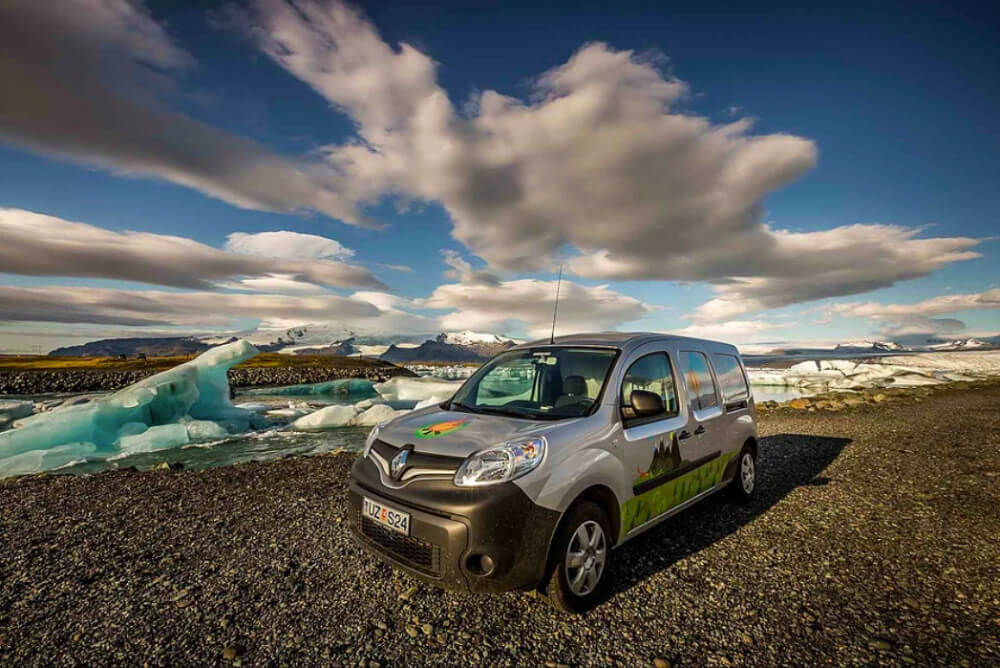
Vehicle size plays a role in how a campervan reacts to wind. Smaller vans generally feel more stable, while larger motorhomes catch more crosswind because of their height and wider side panels. You will often notice this difference when driving across exposed areas such as coastal roads or open plains.
When choosing from our fleet, many renters prefer compact campervans because they are easier to handle in windy conditions. Larger models offer more space and comfort, but they can feel more affected by strong gusts.
Campervan Stability in Wind
|
Vehicle |
Wind Stability |
Typical Travelers |
|
Small campervan (e.g., VW Caddy Camper, Renault Kangoo Camper) |
Most stable |
Couples |
|
Mid-size campervan (e.g., VW Transporter Camper) |
Moderate |
Small groups |
|
Large motorhome (e.g., Fiat Ducato Motorhome) |
More wind exposure |
Families |
Practical Tips to Prevent Wind Damage
From our experience, many incidents happen when people step out quickly without checking the wind direction first. The good news is that many of these situations are easy to avoid with a few simple habits.
- Hold the door firmly when opening it - Always keep a strong grip on the handle. Sudden gusts can catch the door quickly, especially in exposed parking areas.
- Park facing the wind when possible - Positioning the front of the campervan toward the wind reduces the force hitting the side doors.
- Avoid opening doors fully during strong gusts - Open the door slowly and only as much as needed. Large campervan doors act like sails when the wind catches them.
- Choose sheltered parking when available - Look for natural wind barriers such as hills, buildings, or other vehicles when stopping.
- Check weather and wind alerts before driving - Icelandic weather can change quickly, so reviewing forecasts before long drives helps avoid the worst conditions.
How to Check Wind Conditions Before Driving
Wind forecasts are easy to check in Iceland. Most travelers rely on a few trusted tools before starting a drive, especially when crossing exposed areas.
SafeTravel Iceland
- Visit SafeTravel.is
- Shows travel warnings and weather alerts
- Highlights dangerous wind conditions for drivers

Icelandic Road Administration Map
- Use the road map from Umferdin.is
- Displays real-time road conditions
- Shows wind warnings and road closures
- Includes live road cameras
Wind Forecast Apps
Other people sometimes prefer detailed wind maps.
Popular tools include:
These apps show:
- wind speed
- wind gusts
- wind direction
When Wind Conditions Become Unsafe for Driving
Icelandic safety authorities and road services monitor wind speeds closely because larger vehicles react more strongly to gusts. As wind speeds increase, drivers should adjust speed, stay alert, or delay travel entirely.
- 10-15 m/s (36-54 km/h) - Wind becomes noticeable. Campervans may start to sway slightly on exposed roads. Most drivers slow down to around 50-60 km/h and keep both hands firmly on the wheel.
- 15-20 m/s (54-72 km/h) - Driving becomes more challenging, especially on open stretches of road. Crosswinds can push the vehicle sideways, and conditions may trigger yellow or orange travel alerts from SafeTravel.is. Many drivers choose to delay driving until conditions improve.
- 20+ m/s (72 km/h and higher) - These conditions are considered unsafe for many vehicles, particularly campervans and motorhomes. Strong gusts can make steering difficult and may lead to road warnings or temporary closures, especially on bridges and exposed mountain roads.
The Truth About Iceland Rental Campervan Wind Damage Insurance
Many travelers search for Iceland rental campervan wind damage insurance before their trip, assuming a special policy exists for strong winds. In reality, most rental companies in Iceland do not offer insurance that covers wind-blown doors, bent hinges, or mirror damage.
If someone online claims to sell a separate wind damage policy before your trip, it is likely misleading or simply a scam. The best protection is understanding the real risks, choosing the right coverage, and driving with care.
If you want clear advice and reliable vehicles, explore our fleet and book your campervan with confidence today.