
 By
By 
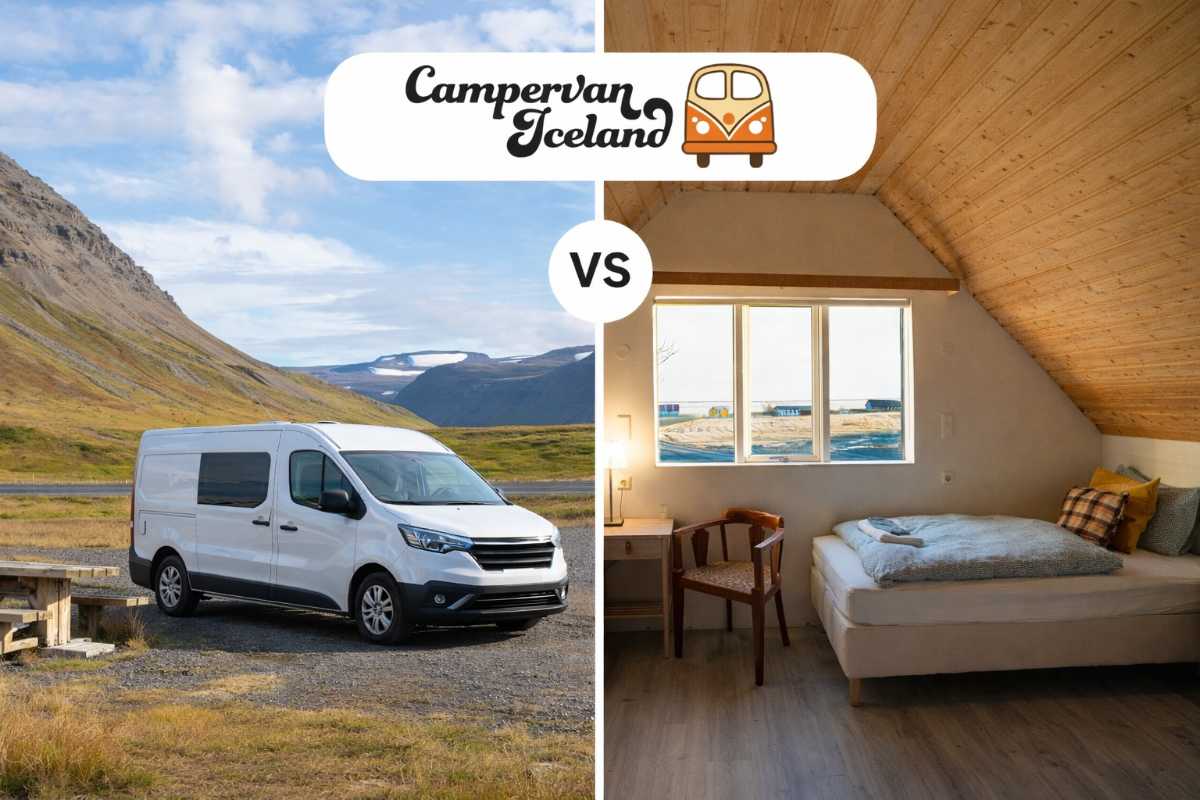
Both work in 2026. A campervan usually makes more sense for a full Ring Road trip, especially in summer. A hotel makes more sense for short stays, winter city breaks, or travelers who want guaranteed comfort every night.
A campervan vs hotel in Iceland comes down to season, route length, and budget. A 7-day summer campervan trip can balance rental, fuel, and campsite fees against high hotel rates.
In winter, hotels offer insulation, private bathrooms, and less exposure to wind. Campervans win on flexibility. Hotels win on predictability. The smarter choice depends on how you plan to move.
Why Is Traveling by Campervan in Iceland a Unique Experience?
When you rent a campervan in Iceland through us, this is the kind of experience you step into:
- Wake up beside waterfalls, lava fields, or black sand beaches without packing and unpacking every morning
- Drive the 1,332 km (828 mi) Ring Road at your own pace without fixed check-in times dictating daily distance
- Cook simple meals inside the van and reduce restaurant spending
- Choose between over 150 campsites nationwide and shift locations if wind forecasts change overnight
- Sleep closer to remote regions like the Eastfjords or Westfjords without a 200 km (124 mi) hotel backtracking
- Adjust to 20 to 24 hours of summer daylight or position for Northern Lights in winter darkness

The Comfort of Traveling by Hotel
Hotels in Iceland offer stability. You trade mobility for insulation, privacy, and routine.
- Private bathrooms, full-sized beds, and daily cleaning without managing your own space
- Stable indoor heating even when outside temperatures drop to 0 to 5°C 32 to 41°F, with strong coastal wind
- No setup or breakdown each morning saves time for exploring.
- On-site restaurants and breakfast buffets that remove the need to cook after a 300 km (186 mi) driving day
- Central locations in Reykjavík and Akureyriare within walking distance of shops and services
- Predictable evenings after long drives
- Better suited for travelers who prefer structure over flexibility
Comparison of Campervan vs Hotel Prices in Iceland
A campervan vs a hotel in Iceland usually boils down to cost before anything else. Any serious price comparison for a campervan vs a hotel needs to start with accommodation pressure.
It can absorb 25 to 40 percent of a 7-day budget. Summer, from June to August, pushes rates 30 to 50 percent higher than May or September. Book 3 to 6 months ahead and availability improves. Leave it late in peak season, and prices reflect demand.
Campervan Prices
- Small campervans in summer typically range from 120 to 200 USD per day. Shoulder season drops closer to 65 to 120 USD. 4x4 models sit higher
- A 1,500 to 2,000 km (930 to 1,240 mi) Ring Road trip usually requires 240 to 320 USD in fuel
- Campsites generally cost 12 to 32 USD per person per night
- Groceries average 8 to 16 USD per meal per person. Restaurant mains frequently exceed 30 USD
- Wind and gravel insurance adds around 40 to 80 USD per trip and is essential in exposed regions
- A realistic 7-day Ring Road itinerary for two people costs between 1,440 and 2,240 USD

Hotel Prices
- Double rooms average 200 to 360 USD per night in summer and 120 to 240 USD in the lower season
- Hotels in Reykjavík typically cost 20 to 40 percent more than hotels in towns such as Akureyri
- Without kitchen access, meals often reach 32 to 56 USD per person per day
- Central parking in Reykjavík can add 16 to 32 USD per night
- A 7-day mid-range stay for two travelers usually falls between 1,680 and 2,800 USD
Comfort in a Campervan vs Hotel in Iceland
Comfort in Iceland depends on what you tolerate and what you expect. Campervans are efficient, while hotels are predictable.
- Sleeping space - Campervans fit 2 to 4 people in fixed or convertible beds measuring 120 to 200 cm (47 to 79 in) wide and 180 to 200 cm (71 to 79 in) long. Hotel double or queen beds range from 160 to 200 cm (63 to 79 in) wide and 200 cm (79 in) long, with more floor space around them.
- Heating systems - Campervans use diesel or electric heaters that maintain 18 to 22°C (64 to 72°F) even when outside temperatures sit between -5 and 10°C (23 to 50°F) with winds of 15 to 25 m/s (34 to 56 mph). Hotels typically hold steady at 20 to 24°C (68 to 75°F) year-round.
- Bathroom access - Campervans rely on shared campsite facilities, often 50 to 200 m (164 to 656 ft) away. Hotels provide private en suite bathrooms with hot water at any hour.
- Privacy considerations - Campervans offer separation from the outside but limited interior space for groups. Hotels provide defined rooms and better sound insulation.
- Storage space - Campervans generally offer 200 to 400 liters (7 to 14 cu ft) in cabinets and under-bed storage. Hotels supply wardrobes and shelving that handle multiple full-size suitcases comfortably.
- Seasonal comfort changes - Summer temperatures of 10 to 15°C (50 to 59°F) make campervans comfortable and practical. Winter conditions between -5 and 5°C (23 to 41°F) with storms make hotels the winner here.

Climate and Road Conditions in Iceland
Driving in Iceland requires attention. Wind is the main variable, not temperature. Conditions change quickly, and daily checks matter.
- Wind is the primary risk - Gusts frequently reach 15 to 30 m/s (34 to 67 mph), especially along exposed coastal sections of the Ring Road. Crosswinds can push vehicles off line and damage doors if opened carelessly.
- Daylight shifts by season - Summer provides 18 to 24 hours of light. Winter limits driving windows to roughly 4 to 7 hours, often between 11:00 and 15:00. A 300 to 500 km (186 to 310 mi) day feels longer in January.
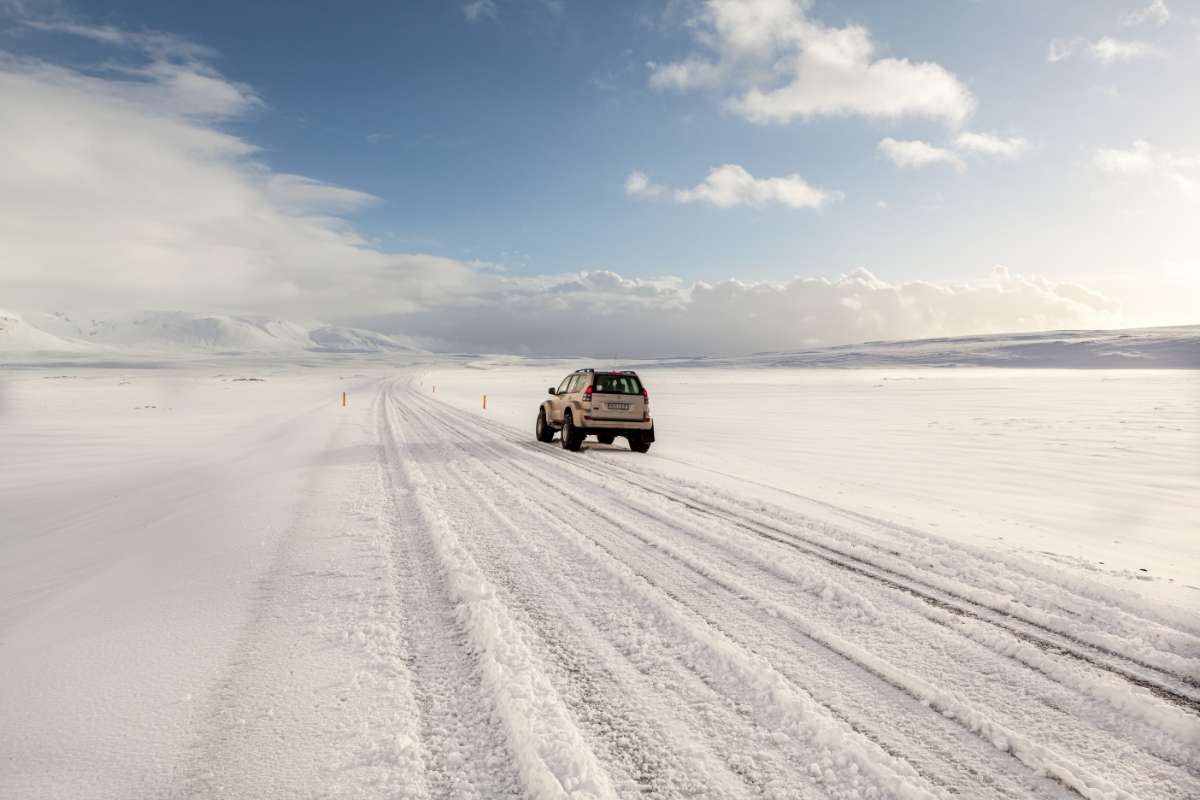
- Winter closures - F-roads close from October to June. Snow depth can exceed 1 m (3 ft) in mountain areas. Main highways are cleared first.
- Gravel roads - Many secondary routes contain 5 to 20 cm (2 to 8 in) loose gravel. Speeds above 50 km/h (31 mph) increase damage risk.
- 4x4 requirements - Highland routes and parts of the East Fjords require clearance above 25 cm (10 in). River crossings may reach 30 to 80 cm (12 to 31 in).
Flexibility on the Road
Flexibility is where the campervan vs a hotel in Iceland difference becomes practical, not theoretical. If route control matters to you, keep reading and decide which setup actually supports the way you travel.
- Reroute when wind warnings shift from the south coast to the east
- Move your overnight stop if a 300 km (186 mi) drive feels unnecessary
- Stay an extra night near a glacier lagoon without rebooking anything
- Accept that hotel reservations in peak summer rarely move without cost

Campervan Facilities vs Hotels
- Built-in beds, compact storage, and onboard heating in one vehicle
- Portable cooking equipment for basic meals
- Limited interior space, but everything you need stays with you
Hotel Facilities and Services in Iceland
- Some larger hotels have 24-hour reception staff who handle late arrivals after Ring Road delays
- Breakfast buffets typically run from 07:00 to 10:00 and cost 16 to 32 USD
- Select properties offer geothermal spa access during set hours
- Luggage storage after checkout if you have a late flight from Keflavík International Airport or want to spend a final day exploring Reykjavík before departure
Campsite Facilities and Services in Iceland
- Larger sites, such as Reykjavík and Höfn, provide shared kitchens seating 20 to 50 people
- Shower blocks typically cost 4 to 6 USD for 5 minutes
- Electricity hookups of 10 to 16 amps cost 8 to 16 USD per night at many sites
- Waste disposal and potable water refill points are centrally located
- Campsites are spaced roughly every 100 to 150 km (62 to 93 mi) along the Ring Road, with around 170 sites nationwide

Pros and Cons of Traveling by Campervan vs Hotel in Iceland
By now, the differences should be clear, but this is where it becomes practical. If you are weighing campervan vs hotel in Iceland, use the breakdown below and decide which tradeoffs you are actually comfortable with.
Pros of Campervans
- Lower combined accommodation and transport cost when compared properly against hotel plus rental car
- Maximum route control without being tied to fixed towns each night
- Direct access to nature without 50 to 100 km (31 to 62 mi) return drives
- No daily packing, unpacking, and check-in routines
Cons of Campervans
- Smaller interior living space, especially for more than two adults
- Shared campsite bathrooms and kitchens
- Direct exposure to wind and rain when stepping outside
- Requires basic planning for water, charging, and overnight stops

Pros of Hotels
- Higher privacy with separate rooms and a defined space
- Reliable indoor comfort regardless of outside wind conditions
- No need to cook unless you choose to
- Efficient for short stays or city-focused itineraries
Cons of Hotels
- Most have fixed check-in and check-out times
- Higher total cost once the rental car and fuel are added
- Limited ability to adjust the route spontaneously
- May require long drives between pre-booked towns
Summary Comparison Table
|
Category |
Campervan |
Hotel |
|
Cost |
Combined vehicle and accommodation often lower overall |
Separate car and room increases total spend |
|
Flexibility |
High. Change route or overnight stop easily |
Low in peak season. Bookings lock you in |
|
Privacy |
Compact shared living space |
Private room and bathroom |
|
Weather Exposure |
Step outside into conditions |
Minimal exposure beyond transit |
|
Logistics |
Self-managed. Campsites, water, planning |
Structured. Check in, check out, fixed locations |
Comparative Table of Campervan vs Hotel Prices for a 7-Day Trip
If you strip emotion out of the campervan vs a hotel debate, it becomes a numbers exercise. Below is a realistic summer scenario for two people driving roughly 1,500 km (930 mi) around the Ring Road during peak season.
|
Category |
Campervan |
Hotel + Car |
|
Vehicle Rental (7 days) |
1,050 to 1,750 compact 2WD |
420 to 700 compact 4x4 |
|
Accommodation (7 nights) |
Included |
1,260 to 2,100 double room |
|
Fuel |
250 to 350 |
250 to 350 |
|
Campsites |
140 to 280 |
Not applicable |
|
Food (7 days) |
350 to 500 groceries |
700 to 1,050 restaurants |
|
Estimated Total |
1,790 to 2,880 |
2,630 to 4,200 |
The gap is not minor. In peak summer, campervans can run 20 to 35 percent lower for people covering serious distances daily.
FAQ About Campervan vs Hotel in Iceland
Is a campervan worth it in Iceland?
Yes, depending on the season and travel style. Campervans offer strong value for couples or small groups covering distance. Ideal for Ring Road trips. Less practical for short, city-focused stays.
Can campervans drive on F-Roads in Iceland?
Only 4x4 campervans are permitted on marked F-roads. 2WD models are restricted from Highland routes. Areas like Landmannalaugar require proper clearance. Driving illegally voids insurance coverage.
Is a campervan warm enough in winter?
Yes. Our campervans use diesel heaters that maintain 18 to 22°C (64 to 72°F) inside, even in subzero conditions. Our state of the art fiberglass insulated builds retain heat efficiently
Which option is better for a 3-day trip?
Hotels usually make more sense for short stays focused on Reykjavík and the Golden Circle. Campervans become more efficient when covering longer distances.
Do hotels sell out faster than campervans in summer?
Often yes, especially in smaller towns. Rural hotel inventory is limited. Campervans offer more flexibility because campsites are numerous and do not require fixed regional bookings.